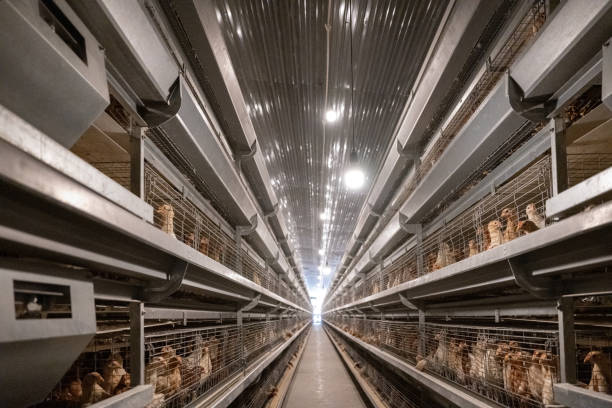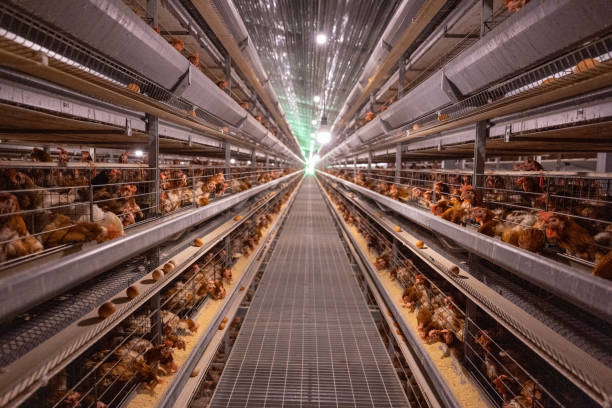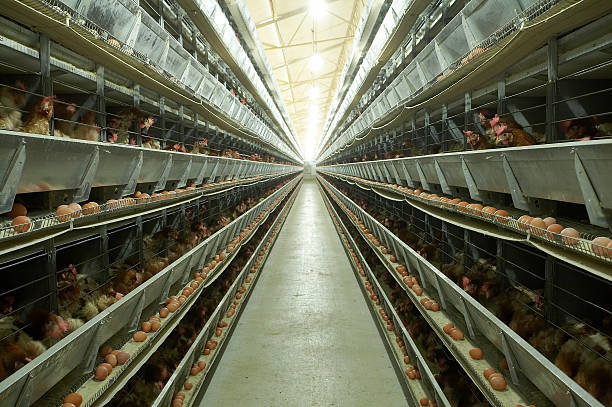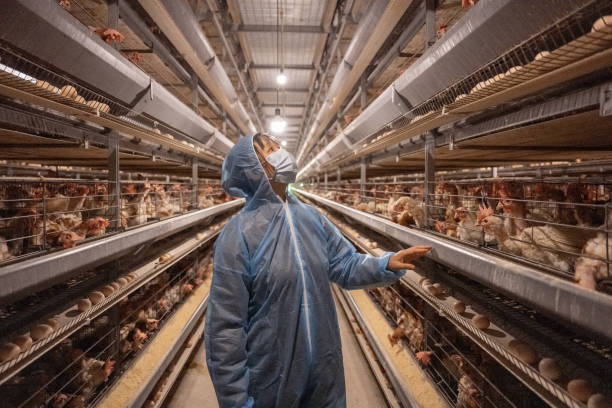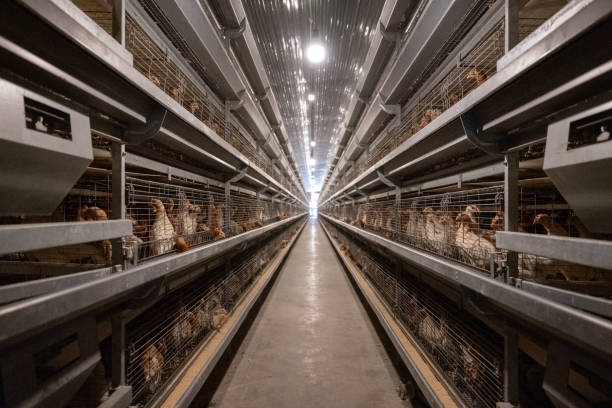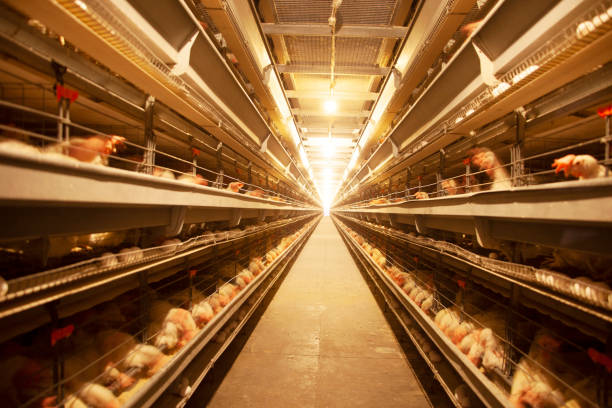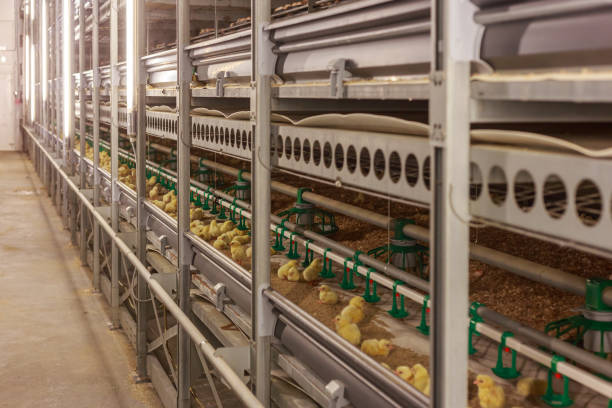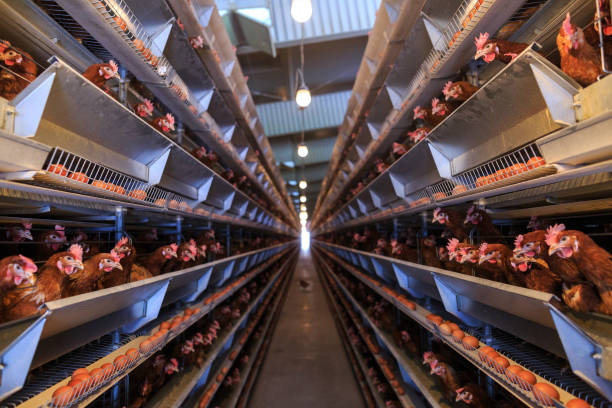

For Nigerian farms operating at a 10,000-bird scale, selecting the correct housing infrastructure is a decisive factor for profitability and operational stability. This section details how a purpose-built bird poultry cage system for layers directly tackles regional challenges and secures long-term returns on investment.
- Optimized bird density, ensuring each layer has adequate space to express natural behaviors and reduce stress-induced behaviors like feather pecking.
- Superior manure management, with automated dropping belts keeping the environment dry and significantly lowering ammonia levels—a critical factor in Nigeria’s humid climate.
- Enhanced feed conversion ratios (FCR), as controlled feeding systems minimize waste, potentially improving FCR by 5-10% compared to less efficient setups.
Regionally, a robust bird poultry cage system for layers addresses two core challenges for large-scale Nigerian poultry farmers. First, it mitigates the high operational costs associated with manual labor and disease outbreaks. Second, it provides structural durability to withstand local environmental conditions. The key regional advantage is risk reduction; a reliable system protects your capital investment from losses due to poor bird health or inefficient resource use.
Ultimately, the right cage system is not an expense but a strategic asset for a 10,000-bird farm. We provide heavy-gauge, hot-dip galvanized systems engineered for the Nigerian market, backed by local technical support and installation. Contact us for a customized cost-benefit analysis and layout plan tailored to your specific farm location.
Evaluating Bird Poultry Cage System for Layers Specifications for Space and Production Efficiency
When selecting a bird poultry cage system for layers, a thorough evaluation of its specifications is crucial to balance space utilization with optimal production efficiency. This analysis ensures the housing solution supports bird welfare, streamlines management, and maximizes return on investment for your poultry farm.
- Tier height and depth for proper ventilation and manure drying
- Number of birds per cage unit and the resulting stocking density
- Linear feeder and nipple drinker space per bird
For operations in Nigeria, where environmental control and resource efficiency are paramount, certain features become non-negotiable. The cage design must accommodate local climate challenges and common farm scales.
- Prioritize systems with heavy-gauge, hot-dip galvanized steel to withstand high humidity and ensure a long service life.
- Opt for designs that facilitate manure removal, a critical factor for maintaining flock health in tropical conditions.
- Select a capacity range that matches available poultry house dimensions and local market demands to avoid underutilization or overcrowding.
| Evaluation Factor | Specification Focus | Impact on Efficiency |
|---|---|---|
| Space per Bird | Minimum of 450-500 cm² per layer | Ensures welfare compliance and reduces mortality |
| System Layout | A-type or H-type configurations | Determines stocking density and walkway space |
| Durability | Galvanization thickness (e.g., Z275) | Reduces long-term replacement costs and downtime |
Ultimately, the right specifications create a foundation for sustained high yield. By matching the technical details of your bird poultry cage system for layers to your operational goals and regional conditions, you build a more productive and manageable enterprise. We provide customized layouts with a 15-year durability guarantee and local technical support. [Contact us] for a free space efficiency analysis and a tailored cage layout proposal for your farm’s capacity.
Prioritizing Bird Welfare Within Your Bird Poultry Cage System for Layers
Prioritizing bird welfare within your poultry operation is not just an ethical choice but a strategic investment that directly impacts egg production, bird health, and overall farm profitability in Nigeria. This section explores how a well-designed bird poultry cage system for layers can be optimized to meet the physiological and behavioral needs of your flock.
- A minimum of 450-500 cm² of usable space per bird
- Properly sloped flooring to allow eggs to roll away cleanly
- Easy access to feed and water at all times
Environmental control is another critical pillar. The right cage system facilitates better management of temperature, air quality, and manure. In Nigeria’s hot climate, ensuring excellent ventilation through the cage tiers is non-negotiable. A well-structured system allows for:
- Installing effective cooling pads or fans above the cage rows.
- Implementing automated manure removal belts to keep ammonia levels low.
- Ensuring uniform light distribution to regulate laying cycles and reduce bird anxiety.
Ultimately, a welfare-focused bird poultry cage system for layers translates to tangible business results. For instance, a farm in Ogun State with a 5,000-bird A-Type system reported a 12% reduction in mortality and a 5% increase in egg production within six months of upgrading to a cage with better space allocation and ventilation. This demonstrates that investing in bird comfort directly supports a more resilient and productive operation.
By integrating these welfare principles, you secure a more sustainable and profitable layer farm. We provide A-Type cages engineered for Nigeria’s climate, featuring reinforced galvanized steel and designs that simplify daily management. Contact us for a customized layout plan and ROI analysis tailored to your farm’s scale.
Calculating ROI and Long-Term Costs for a Bird Poultry Cage System for Layers
This section explains how to evaluate the financial viability of a bird poultry cage system for layers in Nigeria, focusing on upfront investment versus long-term operational gains.
- The cage units, feeders, and drinkers
- Installation and labor
- Necessary housing modifications
Next, project your long-term costs and savings over 5-10 years. A durable bird poultry cage system for layers significantly impacts this calculation through:
- Reduced feed waste (up to 15-20% savings compared to floor systems).
- Lower mortality rates from disease and pecking.
- Decreased labor requirements for egg collection and bird management.
- Consistent, high-quality egg production for better market prices.
| Cost/Saving Factor | Typical Impact in Nigeria |
|---|---|
| Initial Investment | ₦2,500 – ₦3,500 per bird capacity |
| Annual Feed Saving | 15-20% |
| Labor Efficiency Gain | 30-40% |
A thorough analysis shows that while the initial outlay is significant, the system pays for itself by boosting efficiency and output. We provide hot-dip galvanized A-Type cages designed for the Nigerian climate, backed by local technical support. [Contact us] for a personalized ROI projection based on your farm’s scale.
Implementing Your Chosen Bird Poultry Cage System for Layers: A Practical Guide
This section provides a practical, step-by-step approach to installing and managing your new A-Type layer cage system, ensuring a smooth transition for your flock and your operations in Nigeria.
Successful implementation begins with proper site preparation and assembly. Follow this sequence:
- Prepare the Floor & Environment: Ensure a level, concrete floor with adequate drainage. The poultry house should be well-ventilated, secure, and have reliable access to power and water lines.
- Unpack & Inventory: Carefully unpack all components against the provided manual. Verify all parts, including panels, feeders, drinkers, and manure belts, are present and undamaged.
- Assemble the Structure: Start by bolting the main frame sections together. Then, attach the wire mesh panels, ensuring all connections are secure to prevent sagging or gaps in your bird poultry cage system for layers.
- Feeding: Install the automatic feeder lines and calibrate them to deliver a consistent 110-120 grams of feed per bird daily.
- Watering: Connect nipple drinker lines, ensuring a water pressure of 15-20 PSI to provide 200-250ml of clean water per layer each day.
- Manure Management: Set up the scraper or belt system under the tiers. For an A-Type cage, plan for daily removal to maintain hygiene and air quality.
To illustrate the outcome, consider this case from a mid-scale farm in Ogun State:
| Metric | Before (Deep Litter) | After (A-Type Cage) |
|---|---|---|
| Farm Size | 5,000 Layers | 5,000 Layers |
| Peak Lay Rate | 82% | 91% |
| Feed Wastage | ~12% | Reduced to ~5% |
Adopting this structured approach maximizes your investment. We provide detailed manuals and local technical support for assembly. [Request a customized 5,000-bird layout and management plan (PDF) for your farm].
Securing Your Investment: The Path Forward for Your 10,000-Layer Operation
This section outlines the strategic steps to protect and grow your 10,000-layer investment in Nigeria, focusing on durable infrastructure and operational efficiency.
- Material: Opt for hot-dip galvanized steel to combat humidity.
- Layout: Ensure adequate ventilation and access for feeding/egg collection.
- Local Support: Choose suppliers offering installation and maintenance.
Implementing a structured operational plan is next. Follow these steps:
- Conduct a phased bird introduction to monitor system performance.
- Train staff on daily protocols for the automated bird poultry cage system for layers.
- Establish a preventive maintenance schedule for feeders, drinkers, and manure belts.
To secure your investment’s future, a robust A-Type layer cage system from a reliable partner is essential. We provide cages engineered for Nigeria’s climate with local technical support. Contact us for a customized 10,000-bird layout and ROI analysis.