
A 55,000-bird operation hits a sweet spot in commercial poultry farming. You’re large enough to achieve significant economies of scale—your per-bird costs for feed, labor, and equipment drop substantially compared to smaller farms. You can negotiate better prices with feed suppliers and secure contracts with major buyers who value consistent supply. Yet you’re still manageable enough that a dedicated owner-operator with a good team can run the operation effectively.
The numbers at this scale are impressive. A 55,000-bird layer farm produces over 50,000 eggs daily at peak production—more than 1.5 million eggs per month. A broiler operation can produce multiple batches per year, each yielding tens of thousands of kilograms of meat. The revenue potential is substantial, but so is the investment and the operational complexity.
System Configuration: How to House 55,000 Birds
The configuration of your system depends on whether you’re raising layers or broilers. Let’s look at both options.
For Layer Operations:
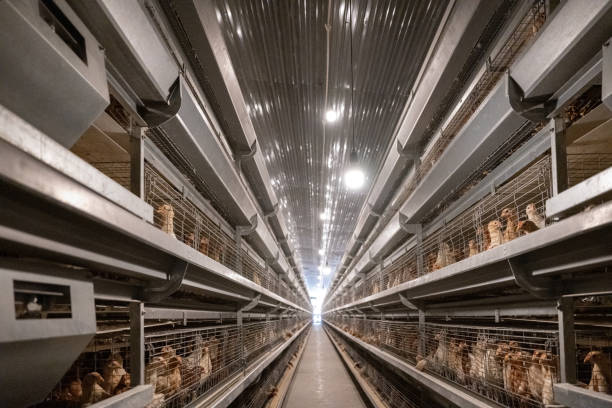
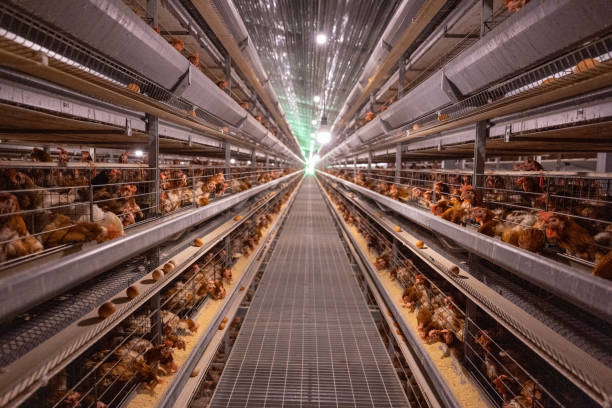
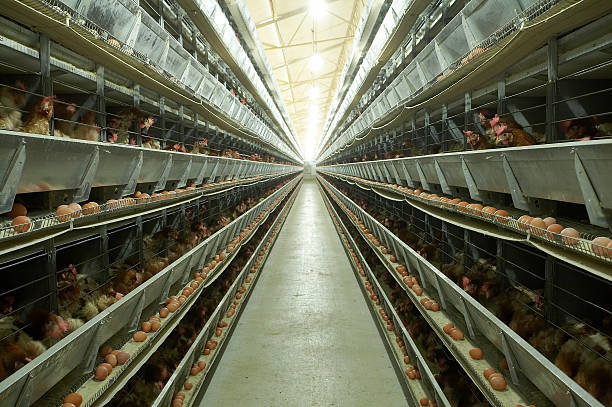
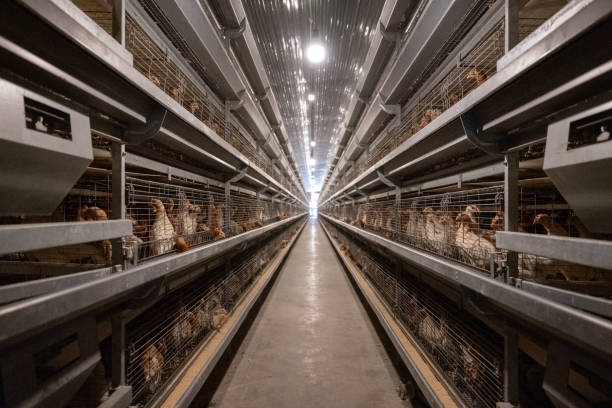
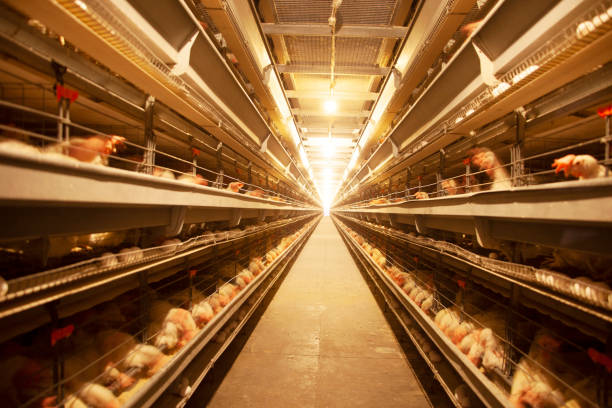
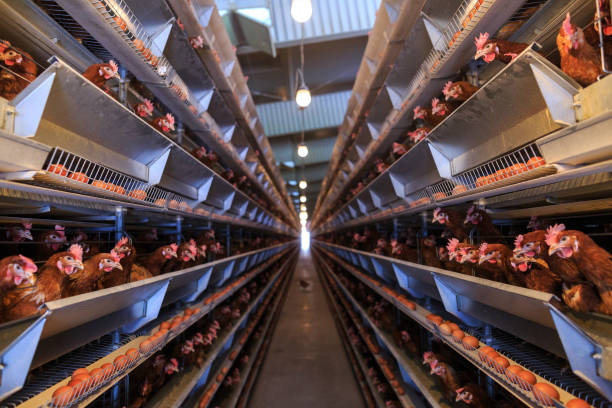
For 55,000 layers, H-type battery cages are the clear choice. These systems stack birds vertically in 4 or 5 tiers, maximizing your use of floor space and integrating seamlessly with full automation.
A typical configuration might use two houses—one with 30,000 birds and one with 25,000—or three smaller houses. Multiple houses improve biosecurity, allow for staggered production schedules, and provide redundancy if issues arise in one house.
For H-type cages, a house for 25,000 to 30,000 layers might be approximately 80 to 100 meters long and 12 to 15 meters wide, with 4 tiers of cages. The exact dimensions depend on the specific cage model and row configuration.
For Broiler Operations:
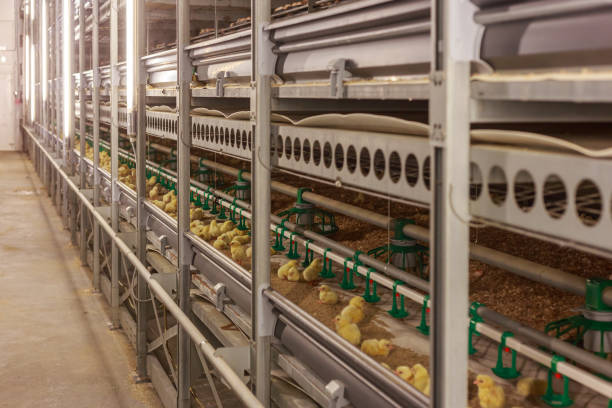
For 55,000 broilers, you’ll need cage systems designed for meat birds. These have stronger floors to support the heavier weight of finishing birds and are configured with appropriate space per bird for optimal growth.
A common approach is to use multiple houses to manage all-in, all-out production. You might have three houses of approximately 18,000 birds each, or two houses of 27,500 each. This allows you to clean and disinfect completely between flocks, which is essential for disease control in broiler operations.
Core Equipment Components for 55,000 Birds
A complete poultry cage system for 55,000 birds includes several integrated components. Here’s what you need.
Cages: The foundation of your system. Choose cages made from hot-dip galvanized steel wire with heavy coating. For layers, cages have sloped floors for eggs to roll out. For broilers, floors are flat or slightly sloped with heavier wire to support weight. The wire gauge should be appropriate for your bird type—typically 14 to 16 gauge for layers, heavier for broilers.
Automatic Feeding System: This delivers precise rations to every cage on a timer. The system includes feed silos outside the house, an auger or chain that moves feed through the house, and drop points at each cage. For 55,000 birds, you’ll need substantial feed storage—typically multiple silos holding several days’ supply. The feeding system should be programmable to adjust rations as birds grow or as production cycles progress.
Nipple Drinking System: Provides clean water on demand without spillage. Quality systems include pressure regulators to maintain optimal flow, filters to prevent clogs, and medication dispensers for treating the flock through the water. For 55,000 birds, water consumption is substantial—a layer operation might use 6,000 to 8,000 liters daily; a broiler operation even more during hot weather.
Automatic Egg Collection (for layers): This is one of the biggest labor-saving components. Eggs roll gently onto conveyor belts that run along each row of cages, then transfer to cross conveyors that take them to the packing room. Breakage rates with well-designed systems are typically below 0.5%, compared to 2-3% with manual collection.
Manure Removal System: Belts under each cage tier automatically carry waste out of the house several times daily. This dramatically reduces ammonia levels, improves air quality, and keeps birds healthier. The relatively dry manure from belt systems is valuable as organic fertilizer—a potential income stream.
Environmental Control System: Sensors throughout the house monitor temperature, humidity, and ammonia. Controllers automatically adjust fans, inlets, heaters, and cooling pads to maintain optimal conditions. For 55,000 birds, this is essential—without proper environmental control, performance suffers and mortality increases.
Backup Power: A generator with automatic transfer switch is non-negotiable. It must be sized to run all critical systems—ventilation, feeding, watering, egg collection, and controls. Without power in hot weather, a flock of this size can suffer catastrophic losses in hours.
Lighting System: Programmable LED lights allow you to control day length for layers or implement lighting programs for broilers. Good lighting improves production, feed conversion, and bird welfare.
Building Requirements for 55,000 Birds
Your poultry houses need to be designed specifically for the cage system and bird numbers.
House Dimensions: For H-type layer cages, a house for 25,000 to 30,000 birds might be 80 to 100 meters long and 12 to 15 meters wide. For 55,000 birds, you’ll likely need two such houses. Work with your equipment supplier to design a layout that fits your land.
Height: For 4-tier H-type cages, you need at least 3.5 to 4 meters at the eaves. For 5-tier systems, 4.5 meters or more. Adequate height ensures proper airflow above the top tier.
Floor: Reinforced concrete, sloped slightly for drainage. It must support the weight of cages, birds, and equipment without cracking.
Walls: In most climates, open-sided houses with roll-up curtains work well. The lower portion should be solid to prevent predators. In areas with extreme temperatures, fully enclosed houses with mechanical ventilation may be necessary.
Roof: Insulated roofing is essential. Uninsulated metal roofs create excessive heat in warm weather. Use insulated panels, reflective coatings, or double roofing.
Ventilation: Designed by a professional based on your bird numbers, climate, and house configuration. Tunnel ventilation with fans at one end and inlets at the other is common for large houses.
Costs for 55,000 Bird Poultry Cage Equipment
Let’s talk about investment. A 55,000-bird poultry cage system is a major capital project. Costs vary based on cage type, automation level, and quality, but here’s a realistic picture.
For a complete automated H-type layer cage system for 55,000 birds—including cages, automatic feeding, nipple drinking, automatic egg collection, manure belts, and environmental controls—you’re typically looking at $200,000 to $350,000 or more depending on quality and features. This works out to roughly $35 to $65 per bird space.
For broiler cage systems, costs are similar or slightly different based on cage design. Broiler cages often have heavier construction, which can affect pricing.
Building construction for two houses of 25,000 to 30,000 birds each can add significantly—often $150,000 to $300,000 or more depending on local construction costs and specifications.
Total project investment, including equipment, buildings, land, initial bird stock, feed inventory, and operating capital, can range from $500,000 to $800,000 or more for a layer operation. For broilers, the numbers are comparable but with different operating capital requirements.
Timeline for Installation
Installing a system for 55,000 birds is a significant project. Here’s a typical timeline.
Planning and design: 1 to 3 months. This includes site assessment, house design, equipment selection, and finalizing specifications.
Manufacturing: 2 to 4 months, depending on the supplier’s workload and the complexity of your system.
Shipping: 4 to 6 weeks by sea to most destinations, plus time for customs clearance.
Building construction: 3 to 6 months, depending on the scale and local conditions. This should be coordinated with equipment delivery.
Equipment installation: 2 to 3 months for a project of this size, depending on crew size and complexity.
Commissioning and training: 2 to 4 weeks. Your supplier should provide on-site supervision and training for your staff.
Total timeline from planning to first birds is typically 8 to 12 months. Plan accordingly.
Automation Level: What You Really Need
For 55,000 birds, full automation is not a luxury—it’s a necessity. Here’s what each level of automation delivers.
Feeding: Full automation is essential. Manual feeding for 55,000 birds would require a crew of workers spending hours every day. Automated feeding ensures every bird gets the same ration, eliminates waste, and frees your team for other tasks.
Watering: Nipple drinkers with pressure regulation are standard. You don’t want open troughs that spill and wet litter.
Egg Collection (for layers): Full automation is highly recommended. Manual collection for 55,000 layers would be back-breaking work requiring many workers, and breakage rates would be much higher.
Manure Removal: Belts are essential for maintaining air quality. Removing manure daily by hand is impractical at this scale.
Environmental Control: Automated controls are essential for maintaining consistent conditions. You can’t manually manage ventilation for 55,000 birds effectively.
Backup Power: Absolutely essential. Without it, you risk losing your entire flock in a power outage.
Managing a 55,000-Bird Operation
Once your system is installed, ongoing management determines your success.
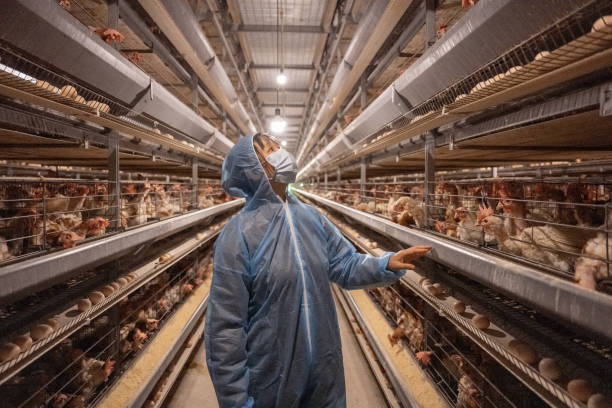
Staffing: For a 55,000-bird automated farm, you typically need 8 to 12 workers plus management. This includes feed management, bird health monitoring, egg handling (for layers), maintenance, and general farm labor. Your automation level affects staffing needs significantly.
Feed Management: Feed is your largest ongoing cost—typically 60% to 70% of operating expenses. Monitor consumption daily, adjust rations as needed, and maintain feed quality. Work with a nutritionist to optimize rations for your bird strain and production stage.
Health Management: Establish a relationship with a poultry veterinarian. Implement vaccination programs appropriate for your area. Train staff to recognize signs of illness and respond quickly. Daily observation is essential—walk through houses and look at your birds.
Egg Handling (for layers): If you’re producing eggs, have a system for grading, packing, and cooling. Egg quality is best maintained with cool storage if you hold eggs for more than a day or two. Build relationships with buyers before your first eggs are ready.
Broiler Management (for broilers): For meat birds, all-in, all-out production is essential. Clean and disinfect completely between flocks. Monitor growth rates and adjust feed accordingly.
Record Keeping: Track everything—feed consumption, water usage, production (for layers), mortality, and costs. Good records help you spot trends and make informed decisions.
Maintenance: Follow manufacturer recommendations for equipment service. Keep spare parts on hand for critical components like motors, belts, and controllers. A small parts inventory prevents costly downtime.
What 55,000 Birds Produces
Understanding your production potential helps you plan for markets and cash flow.
For Layer Operations:
A well-managed layer flock peaks at 90% to 95% production. For 55,000 layers, that’s 49,500 to 52,250 eggs daily. At 365 days per year, annual production is over 18 million eggs.
Feed consumption for 55,000 layers is approximately 6,300 kilograms daily (assuming 115 grams per bird). That’s about 2,300 metric tons annually.
Water consumption is roughly 6,000 to 8,000 liters daily, depending on temperature.
For Broiler Operations:
With 55,000 broilers per batch, and assuming 6 to 7 batches per year, annual production might be 330,000 to 385,000 birds. At an average market weight of 2 to 2.5 kilograms, that’s 660,000 to 960,000 kilograms of meat annually.
Feed consumption for a broiler batch is substantial—about 3 to 4 kilograms of feed per bird, or 165,000 to 220,000 kilograms per batch.
Common Challenges and Solutions
Even the best-planned farms face challenges. Here’s how to prepare.
Disease Outbreaks: Despite best efforts, disease can strike. Have an emergency plan, maintain good vet relationships, and consider insurance if available. Quick response minimizes losses. Strong biosecurity is your best defense.
Feed Price Volatility: Feed costs fluctuate. Build storage for at least a month’s supply so you can buy when prices are favorable. Consider forward contracting with feed suppliers to lock in prices.
Power Outages: In areas with unreliable power, a good generator is essential. Some farms add solar systems to reduce operating costs and provide additional backup.
Market Fluctuations: Egg and meat prices vary seasonally. Budget for lower prices during glut periods and build reserves during good times. Diversifying your customer base helps stabilize demand.
Staff Turnover: Losing trained workers hurts. Pay competitively, invest in training, and create a positive work environment. Cross-train multiple people so you’re not dependent on any single individual.
Making Your Investment Work
A 55,000-bird poultry cage system is a significant investment, but the returns can be substantial. With good management, many farmers recoup their investment within 3 to 5 years. The key is doing it right—planning carefully, investing in quality equipment, and managing diligently.
At Livi Machinery, we’ve helped farmers around the world build successful poultry operations. We understand the challenges and opportunities of farming at this scale. Whether you’re starting fresh or expanding an existing operation, we can design a system that fits your farm and your goals.
Ready to build your 55,000-bird poultry operation? Contact Livi Machinery today for a free consultation and custom system design. Tell us about your goals, your site, and your budget, and we’ll help you create a poultry farm that delivers efficiency, profitability, and peace of mind for years to come.
Frequently Asked Questions
Q1: How many houses do I need for 55,000 birds?
It depends on your cage type and management preferences. For layers, two houses of 25,000 to 30,000 birds each is common. For broilers, two or three houses depending on your production schedule. Multiple houses improve biosecurity and management flexibility.
Q2: How much land do I need for 55,000 birds?
Plan on 4 to 7 acres total, depending on house configuration, manure handling, and support facilities. This includes houses, feed storage, egg handling (for layers), staff facilities, and vehicle access.
Q3: How much does a 55,000-bird layer system cost?
A complete automated H-type layer system typically costs $200,000 to $350,000 or more. Building construction adds $150,000 to $300,000 or more. Total project investment often ranges from $500,000 to $800,000 or more.
Q4: How many workers do I need for 55,000 birds?
With full automation, typically 8 to 12 workers plus management. The exact number depends on whether you’re producing eggs or meat, your level of automation, and whether you do your own packing or transport.
Q5: How much feed do 55,000 layers consume daily?
Approximately 6,300 kilograms daily (115 grams per bird). That’s about 2,300 metric tons annually. Plan for substantial feed storage and reliable supply.
Q6: How much water do 55,000 birds need?
For layers, 6,000 to 8,000 liters daily. For broilers, consumption varies with age and temperature but can be similar or higher during hot weather. Ensure your water source can meet this demand reliably.
Q7: Do I need a generator for 55,000 birds?
Absolutely. A generator with automatic transfer switch is essential. Without power in hot weather, you could lose your entire flock in hours. Size the generator for all critical loads.
Q8: What’s the typical production from 55,000 layers?
At peak production, 49,500 to 52,250 eggs daily. That’s over 18 million eggs annually. Production declines gradually after peak, typically remaining profitable for 12 to 18 months.
Q9: How long does it take to install a 55,000-bird system?
From planning to first birds, expect 8 to 12 months. This includes design, manufacturing, shipping, building construction, installation, and commissioning.
Q10: Can I finance a project this size?
Yes, but you need a solid business plan. Options include commercial bank loans, agricultural development finance programs, equipment financing, and sometimes supplier credit. Work with lenders who understand agriculture.