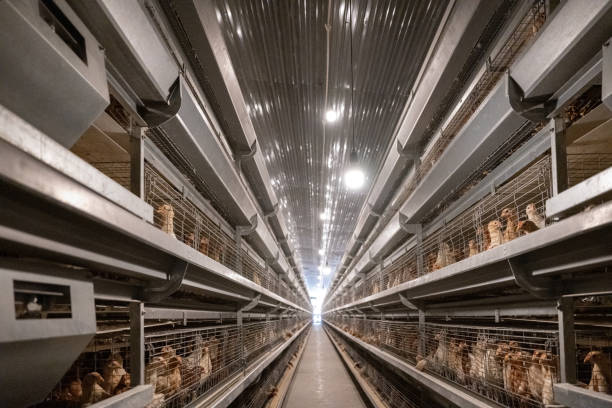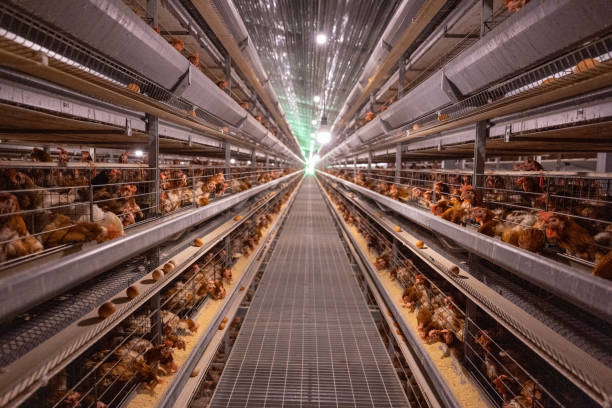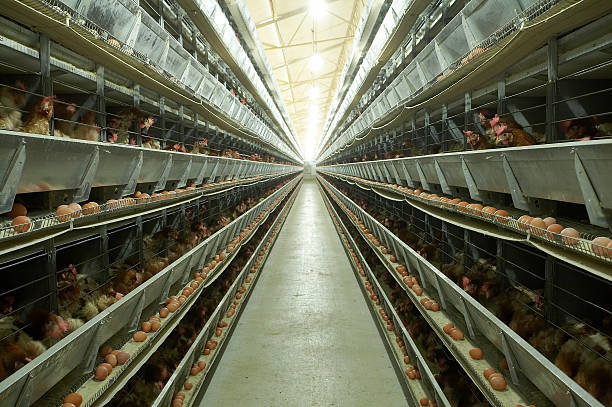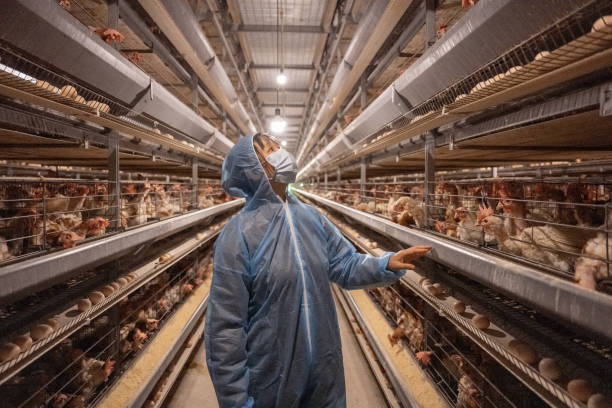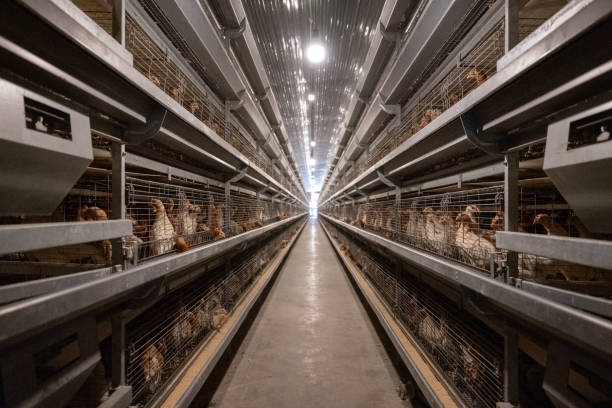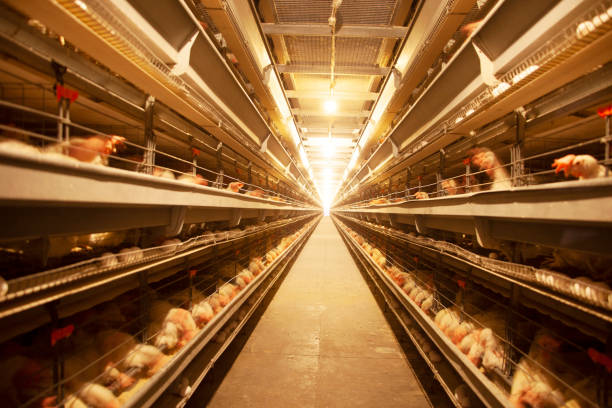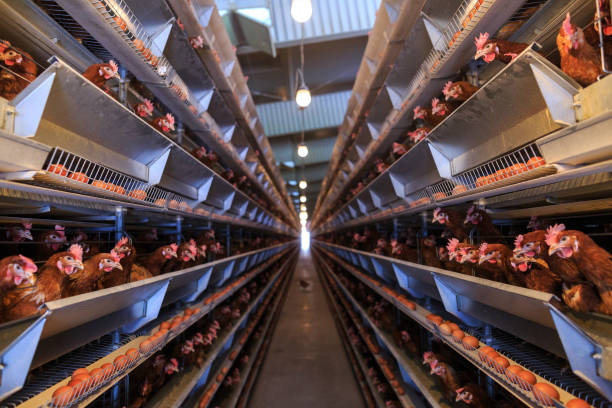

For a poultry farm in Kenya raising 20,000 layers and 10,000 broilers, the recommended solution is to separate the layer house and broiler house, use automatic layer cage equipment for egg production, and configure broiler feeding, drinking, ventilation, and manure management systems according to the farmer’s budget and land conditions. Livi Machinery can provide a complete poultry farm design, including cage layout, automatic feeding, drinking, manure removal, egg collection, ventilation control, transport, installation guidance, and after-sales service.
Kenya has strong demand for both eggs and chicken meat, especially around Nairobi, Mombasa, Kisumu, Nakuru, Eldoret, and other growing commercial farming regions. For investors who want stable egg production and fast broiler turnover, a mixed poultry project with 20,000 layers and 10,000 broilers can create two income streams while improving farm resource utilization.
Livi Machinery provides poultry farm solutions for large and medium-sized farms, including automatic feeding, drinking, manure cleaning, egg collection, ventilation, intelligent control, and full farm design services. The company’s catalogue states that Livi focuses on large-scale chicken farm design and provides full design drawings and customized solutions for customers.
What Is the Best Poultry Farm Design in Kenya for 20,000 Layers and 10,000 Broilers?
For this project, the farm should be divided into two main production zones:
| Farm Area | Quantity | Recommended System | Main Purpose |
|---|---|---|---|
| Layer house | 20,000 layers | A type or H type layer cage system | Commercial egg production |
| Broiler house | 10,000 broilers | Broiler deep litter system or broiler cage system | Meat chicken production |
| Feed storage area | Based on feed plan | Feed silo + conveying system | Reduce feed handling labor |
| Egg handling area | For layer house | Egg collection and storage area | Reduce egg breakage |
| Manure area | Separate from houses | Manure belt or manure collection zone | Improve hygiene |
| Ventilation system | Both houses | Fans, air inlets, cooling pads, controller | Heat and humidity control |
For Kenya, ventilation is especially important because many poultry areas experience warm daytime temperatures, seasonal humidity, and dust. A good poultry house design should allow smooth air exchange, reduce ammonia accumulation, and protect birds from heat stress.
What Cage System Is Suitable for 20,000 Layers in Kenya?
For 20,000 layers, there are two practical options:
Option 1: A Type Layer Cage System
The A type layer cage system is suitable for medium-scale farms that want lower initial investment, easy operation, and good natural ventilation. According to Livi’s product specifications, one A-type 4-tier 5-door cage set can hold 160 birds, with a cage size of 1950mm × 450mm × 410mm.
For 20,000 layers:
| Cage Model | Capacity per Set | Required Quantity |
|---|---|---|
| A type 4-tier 5-door layer cage | 160 birds/set | About 125 sets |
This is a practical solution for farmers in Kenya who have enough land and want a cost-effective layer chicken cage system.
Option 2: H Type Layer Battery Cage System
The H type layer cage system is better for farmers who want higher stocking density, more automation, and easier future expansion. Livi’s H type layer equipment can be configured in multiple tiers, and the catalogue lists models such as 4-tier, 5-tier, and 6-tier systems with different bird capacities per set.
For a farmer planning to expand from 20,000 layers to 40,000 or 60,000 layers in the future, the H type system is usually more suitable because it saves land and makes centralized feeding, manure removal, and egg collection easier.
What Equipment Is Needed for 10,000 Broilers?
For 10,000 broilers in Kenya, the farmer can choose either a broiler deep litter system or a broiler cage rearing system.
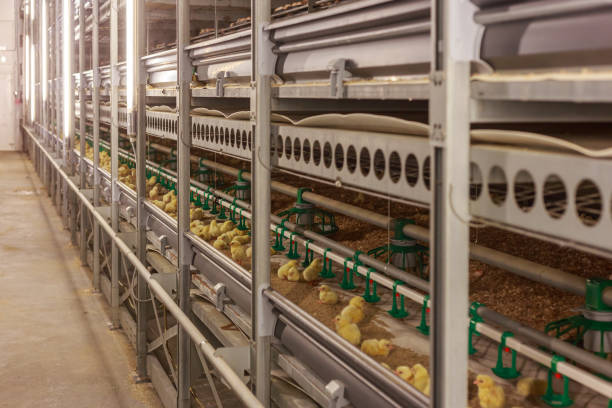
The broiler deep litter system is suitable for farmers who want a simpler structure and lower initial investment. It normally includes:
- Automatic pan feeding system
- Automatic nipple drinking system
- Feed silo and feed conveying line
- Ventilation fans
- Cooling pads or air inlets
- Lighting system
- Brooder/heating system for chicks
- Environmental control system
Livi’s broiler feeding pan is designed with adjustable feeding levels, a feed gate switch, and a tray structure that helps reduce feed waste and allows chickens to eat fresh feed.
For higher-density production, the broiler cage system can be considered. Livi’s stacked broiler cage system includes automatic feeding, automatic drinking, automatic manure cleaning, good ventilation, and manual chicken catching. The catalogue also notes that the cage frame uses hot-dip galvanized materials, and each broiler cage can raise 17 chickens at about 2.5 kg under a density of 50 kg/m².
How Should the Layer House and Broiler House Be Planned?
For a mixed poultry farm in Kenya, the layer and broiler houses should not be placed too close together. This helps reduce disease transmission risk and makes daily management easier.
A practical layout should include:
| Zone | Design Suggestion |
|---|---|
| Layer house | Place in a clean and stable area for long-term egg production |
| Broiler house | Separate from layer house because broilers have shorter production cycles |
| Feed storage | Close to both houses, but protected from rain and rodents |
| Egg collection room | Near layer house, with clean and shaded storage |
| Manure zone | Downwind and away from water source |
| Staff channel | Separate clean and dirty routes |
| Vehicle route | Easy for feed delivery, egg transport, and broiler sales |
For 20,000 layers and 10,000 broilers, Livi Machinery can design the house length, width, row spacing, cage arrangement, ventilation direction, and equipment configuration according to the customer’s land size and budget.
How Can Automation Improve Farm Management?
Automation is one of the most important upgrades for medium and large poultry farms in Kenya. It can reduce labor pressure, improve feeding consistency, reduce egg breakage, and keep the poultry house cleaner.
For the layer house, the recommended automatic systems include:
| System | Function | Benefit |
|---|---|---|
| Automatic feeding system | Delivers feed evenly to each cage row | Reduces labor and feed waste |
| Automatic drinking system | Provides clean water through nipple lines | Improves bird health |
| Automatic manure removal | Removes manure by belt or scraper | Improves hygiene and reduces ammonia |
| Automatic egg collection | Transfers eggs by egg belt | Reduces egg breakage |
| Ventilation control system | Controls fans, cooling pads, air inlets | Reduces heat stress |
| Intelligent control cabinet | Manages equipment and environmental data | Improves daily operation |
Livi’s automatic feeding system supports manual, timing, and remote control modes, and the catalogue highlights that automatic feeding can save manpower and improve efficiency.
For the broiler house, automatic pan feeding and nipple drinking are especially important because broilers grow quickly and require stable feed and water supply. A poor feeding system can cause uneven growth, higher feed waste, and lower market weight.
What Are the Main Customer Concerns in Kenya?
Farmers in Kenya usually care about five key issues before investing in poultry equipment:
1. Land Use
If the land is limited, H type layer cages and broiler cages are better choices because they increase stocking density. If the land is sufficient, A type layer cages and broiler deep litter systems can reduce initial investment.
2. Labor Cost
Manual feeding, egg collection, and manure cleaning require many workers. Automation helps reduce daily labor and makes farm management more stable.
3. Electricity Stability
Some areas may experience power instability. For an automatic poultry farm, Livi Machinery can recommend backup generator planning, controller protection, and practical operation modes.
4. Heat and Ventilation
Kenya’s warm climate requires good airflow, cooling, and environmental control. Fans, cooling pads, air inlet windows, and controllers should be designed based on house size and bird density.
5. Future Expansion
A farm starting with 20,000 layers and 10,000 broilers may later expand to 50,000 or 100,000 birds. The first design should reserve space for additional houses, feed storage, manure treatment, and transport routes.
Recommended Equipment Configuration for This Kenya Project
| Production Area | Recommended Equipment |
|---|---|
| 20,000 layers | A type or H type layer cages |
| Egg production | Automatic egg collection system |
| Feeding | Feed silo, feed conveying line, automatic feeder |
| Drinking | Nipple drinking system, pressure regulator, waterline front end |
| Manure management | Automatic manure removal system |
| Broilers | Broiler deep litter system or broiler cage system |
| Climate control | Fans, cooling pads, air inlets, controller |
| Farm design | House layout, cage row planning, ventilation design |
| Service | Shipping, installation guidance, after-sales support |
This configuration helps Kenyan poultry farmers build a more efficient, cleaner, and easier-to-manage farm.
Why Choose Livi Machinery for a Kenya Poultry Project?
Livi Machinery provides more than cage equipment. The company offers a complete poultry farming solution from early design to equipment installation guidance. Its catalogue states that Livi integrates product research and development, design, manufacturing, installation, and service, and its products have been exported to more than 80 countries and regions.
For a Kenya project with 20,000 layers and 10,000 broilers, Livi Machinery can provide:
- Free poultry farm layout design
- Cage system selection based on budget and land
- Layer and broiler house equipment configuration
- Automatic feeding, drinking, manure removal, and egg collection systems
- Ventilation and environmental control system
- Shipping and installation guidance
- After-sales technical support
For farmers preparing to build or expand a commercial poultry farm, choosing the right poultry cage equipment for large farms can reduce future management problems and improve long-term production stability.
FAQ
1. How much space is needed for 20,000 layers and 10,000 broilers in Kenya?
The exact land size depends on whether the farmer chooses A type cages, H type cages, broiler cages, or deep litter broiler farming. Livi Machinery can design the house size and layout according to the customer’s land dimensions.
2. Is A type or H type layer cage better for 20,000 layers?
A type cages are more cost-effective and suitable for medium farms. H type cages are better for higher automation, land saving, and future expansion.
3. Can layers and broilers be raised on the same farm?
Yes, but they should be raised in separate poultry houses with independent feeding, drinking, ventilation, and biosecurity management.
4. What automatic systems are recommended for this farm?
For 20,000 layers and 10,000 broilers, automatic feeding, drinking, manure removal, egg collection, ventilation, and environmental control systems are recommended.
5. Can Livi Machinery provide a complete design for a Kenya poultry farm?
Yes. Livi Machinery can provide free poultry farm design, equipment configuration, quotation, shipping plan, installation guidance, and after-sales support.