
A 90,000-bird layer farm is a substantial commercial operation. At this capacity, you’re producing tens of thousands of eggs daily—enough to supply multiple wholesale buyers or your own processing and packaging operation. The economics at this scale are compelling. Your per-bird costs for feed, labor, and equipment drop significantly compared to smaller farms. You can negotiate better prices with feed suppliers and secure contracts with major buyers who value consistent supply.
But the operational demands are equally significant. You need robust systems that can run continuously without failure. You need infrastructure that can handle the flow of feed, water, eggs, and manure. You need a team that understands commercial poultry management. And you need equipment designed specifically for high-density, high-volume production.
The good news is that the technology for farms of this size is well established. Modern automatic layer cage systems are engineered to handle capacities well beyond 90,000 birds, with proven reliability and efficiency. When designed and installed correctly, these systems run smoothly for years with minimal downtime.
System Design: H-Type Cages for Maximum Density
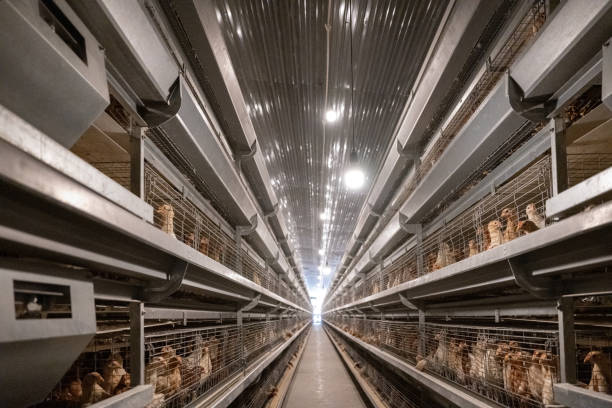
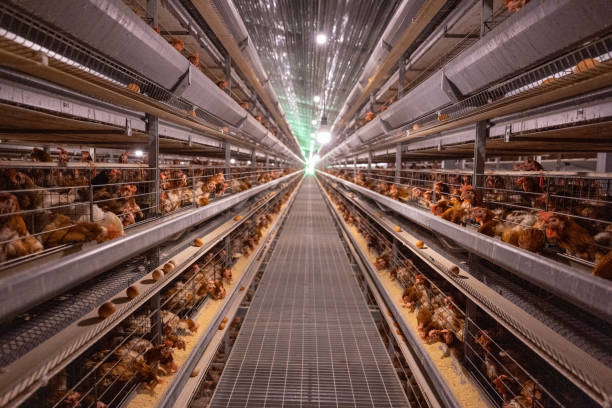
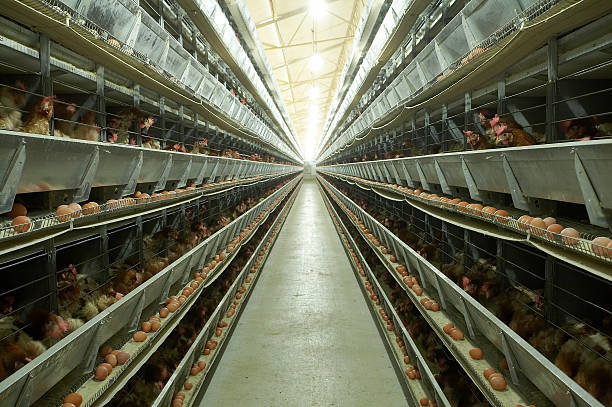
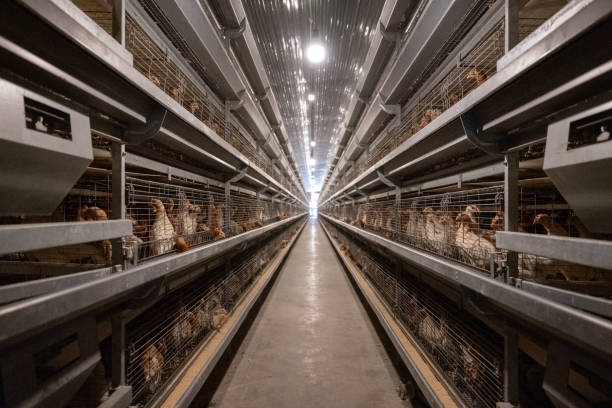
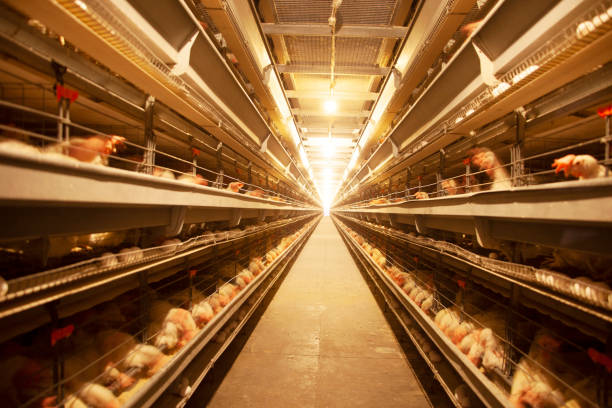
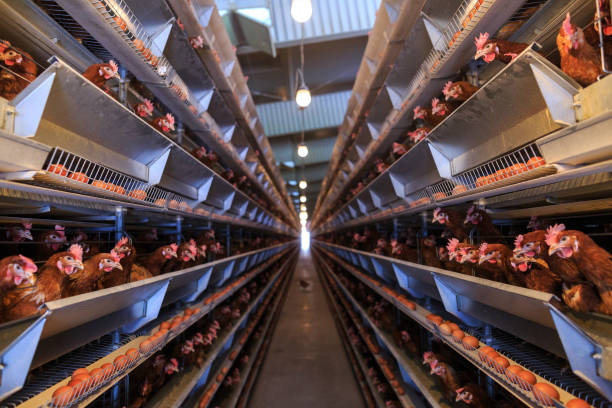
For a 90,000-bird layer farm, H-type battery cages are the clear choice. These systems stack birds vertically in 4 or 5 tiers, maximizing your use of floor space and integrating seamlessly with full automation.
House configuration for 90,000 birds typically involves multiple houses rather than one massive structure. This provides better biosecurity, easier management, and some redundancy if issues arise. A common configuration is three houses of 30,000 birds each, or four houses of 22,500 birds each. The exact layout depends on your land, building preferences, and management style.
House dimensions for a 30,000-bird house using 4-tier H-type cages might be approximately 80 to 100 meters long and 12 to 15 meters wide. For 90,000 birds total, you’d need three such houses or a combination that fits your site. Work with your equipment supplier to design a layout that optimizes workflow and minimizes travel distances for feed delivery and egg collection.
Tier height is critical. You need adequate headroom above the top tier for airflow and access. Minimum eaves height for 4-tier systems is typically 3.5 to 4 meters. For 5-tier systems, you need even more height—often 4.5 meters or more. Ensure your building design accommodates this.
Row spacing affects both airflow and access. Rows should be spaced to allow good air movement through the house and provide enough room for workers and equipment to move freely. Your supplier should provide detailed layout drawings showing optimal spacing.
Core Components of a 90,000-Bird Automatic System
A complete automatic layer system for this capacity includes several integrated components. Here’s what you need.
H-Type Layer Cages form the foundation. These are made from heavy-gauge, hot-dip galvanized steel wire that resists rust and corrosion for 15 years or more. The floors are sloped at the optimal angle for eggs to roll out gently. Doors are designed for easy access when you need to inspect or catch birds. The structure is engineered to support multiple tiers of birds without flexing or sagging.
Automatic Feeding System delivers precise rations to every cage on a timer. The system typically uses an auger or chain that runs the length of the house, with drop points at each cage. Feed is stored in a large silo outside the house and automatically transferred to the hoppers inside. For 90,000 birds, you’ll need significant feed storage capacity—typically multiple silos holding several days’ supply. The feeding system should be programmable to adjust rations as the flock ages.
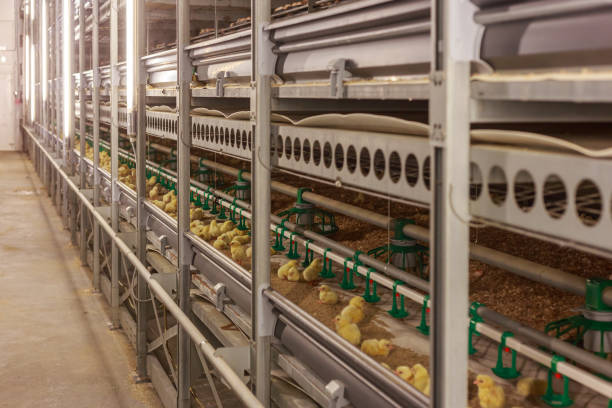
Nipple Drinking System provides clean water on demand. Quality systems include pressure regulators to maintain optimal flow, filters to prevent clogs, and medication dispensers for treating the flock through the water. For 90,000 birds, water consumption is substantial—typically 10,000 to 15,000 liters per day or more depending on temperature. You need a reliable water source with adequate capacity and backup.
Automatic Egg Collection is perhaps the most labor-saving component. Eggs roll gently onto conveyor belts that run along each row of cages. These belts carry eggs to the end of the house, where they transfer to a cross conveyor that takes them to the egg collection room. From there, they can go to automatic grading and packing equipment. Breakage rates with well-designed systems are typically below 0.5%, compared to 2-3% with manual collection.
Manure Removal System uses belts under each cage tier to carry waste out of the house several times daily. These belts run on timers, discharging manure onto a cross conveyor that takes it to a collection area or directly into trucks for removal. Removing manure frequently keeps ammonia levels low, which is essential for bird health and worker comfort. The relatively dry manure from belt systems is valuable as organic fertilizer.
Environmental Control System maintains optimal temperature, humidity, and air quality. Sensors throughout the house monitor conditions and automatically adjust fans, inlets, heaters, and cooling pads. For 90,000 birds in a tropical or subtropical climate, evaporative cooling is often essential during hot periods. The control system should be able to manage multiple houses independently, with remote monitoring and alert capabilities.
Backup Power is non-negotiable at this scale. A generator with automatic transfer switch must be sized to run all critical systems—ventilation, feeding, watering, egg collection, and controls—for at least several days. Without power, a flock of this size can suffer catastrophic losses in hours during hot weather.
Automation and Control Features
Modern high-capacity systems offer sophisticated control features that make management easier and more precise.
Centralized Control allows you to monitor and adjust all houses from a single location. You can see feed consumption, water usage, egg production, temperature, humidity, and alarm status for each house at a glance.
Programmable Feeding lets you set different rations for different stages of production. You can adjust feed amounts as the flock ages, ensuring birds get exactly what they need without waste.
Egg Counting and Recording tracks production by house, row, or even individual cage sections. This data helps you monitor flock performance and spot problems early.
Environmental Alarms notify you immediately if conditions go outside set parameters. Alerts can be sent to your phone or computer, allowing rapid response even when you’re not on site.
Data Logging records all system data over time, allowing you to analyze trends and make informed management decisions. You can see how feed conversion, egg production, and mortality change over the flock cycle.
Building Design for 90,000 Birds
Your poultry houses need to be designed specifically for high-capacity cage systems. Here are key considerations.
Floor should be reinforced concrete, sloped slightly for drainage. It needs to support the weight of cages, birds, and equipment without cracking. Proper floor design also facilitates manure removal and cleaning between flocks.
Walls can be open-sided with curtains or solid with mechanical ventilation, depending on your climate. In hot climates, open-sided houses with curtains and fans often work well. In areas with extreme temperatures, fully enclosed houses with tunnel ventilation and cooling may be necessary.
Roof should be insulated to reduce heat gain. Light-colored or reflective materials help keep houses cooler. Adequate overhangs protect curtains and openings from rain.
Ventilation must be designed by a professional based on your bird numbers, climate, and house configuration. Tunnel ventilation with fans at one end and inlets at the other is common for large houses. Airflow must be sufficient to remove heat and moisture and maintain air quality throughout the house.
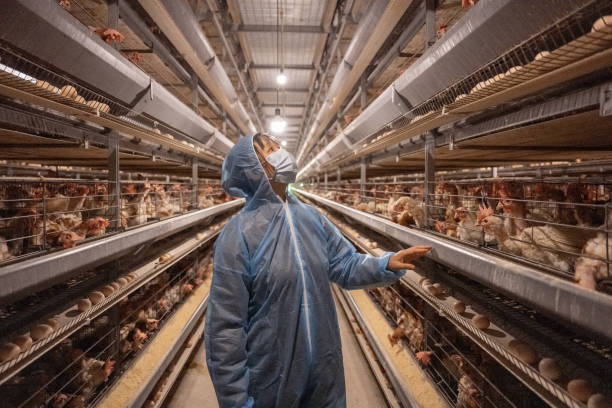
Biosecurity features should be built into the design. Consider separate entries for staff and supplies, footbaths or showers, and areas for changing clothes. Good biosecurity is essential for preventing disease introduction.
What a 90,000-Bird System Costs
Let’s talk about investment. A 90,000-bird automatic layer cage system is a major capital project. Costs vary based on specifications, quality, and location, but here’s a realistic picture.
For a fully automatic H-type layer cage system for 90,000 birds—including cages, automatic feeding, nipple drinking, automatic egg collection, manure belts, and environmental controls—you’re typically looking at $3.5 million to $5.5 million or more depending on quality and features . This works out to roughly $40 to $60 per bird space.
Building construction for three houses of 30,000 birds each can add significantly—often $1 million to $2 million or more depending on local construction costs and specifications.
Total project investment, including equipment, buildings, land, initial bird stock, feed inventory, and operating capital, can range from $5 million to $8 million or more .
These numbers are significant, but the returns at this scale are correspondingly large. With good management, a 90,000-bird farm can generate substantial annual revenue, and the equipment investment is typically recovered within 3 to 5 years.
Installation and Timeline
Installing a system of this size is a major project. Here’s a typical timeline.
Planning and design takes 1 to 3 months. This includes site assessment, house design, equipment selection, and finalizing specifications.
Manufacturing takes 2 to 4 months, depending on the supplier’s workload and the complexity of your system.
Shipping to most destinations takes 4 to 6 weeks by sea, plus time for customs clearance.
Building construction should be coordinated with equipment delivery. Construction typically takes 3 to 6 months, depending on the scale and local conditions.
Equipment installation takes 2 to 3 months for a project of this size, depending on the crew size and complexity.
Commissioning and training takes 2 to 4 weeks. Your supplier should provide on-site supervision and training for your staff.
Total timeline from planning to first birds is typically 8 to 12 months. Plan accordingly.
Managing a 90,000-Bird Operation
Once your system is installed, ongoing management is critical to success.
Staffing for a 90,000-bird automated farm typically requires 8 to 12 workers plus management. This includes feed management, egg handling, maintenance, and general farm labor. Your automation level affects staffing needs significantly.
Feed management is your largest ongoing cost. Work with a nutritionist to formulate rations that optimize production for your bird strain. Monitor feed consumption daily and adjust as needed.
Health management requires a good relationship with a poultry veterinarian. Implement vaccination programs appropriate for your area. Train staff to recognize signs of illness and respond quickly.
Egg handling should be efficient. If you’re not grading and packing on site, have arrangements with buyers to move eggs promptly. Egg quality is best maintained with cool storage if you hold eggs for more than a day or two.
Manure management can be an income stream if you sell it as fertilizer. Alternatively, you need a plan for environmentally responsible disposal.
Record keeping is essential at this scale. Track production, feed consumption, water use, mortality, and costs. Use data to make informed management decisions.
Working with the Right Supplier
For a project of this magnitude, choosing the right equipment supplier is critical. Here’s what to look for.
Experience with large-scale systems is essential. You want a supplier who has installed similar systems and can show you references.
Quality materials are non-negotiable. Confirm that cages are hot-dip galvanized with heavy coating, wire gauge is appropriate, and components are from reputable manufacturers.
Comprehensive support matters. Your supplier should provide design assistance, installation supervision, training, and ongoing technical support.
Clear contracts protect both parties. Your agreement should specify equipment, delivery timeline, payment terms, warranty, and responsibilities for installation.
Local presence can be valuable. A supplier with representatives in your region can provide faster support and parts availability.
At Livi Machinery, we have extensive experience with large-scale layer projects across Africa, Asia, and beyond. We provide complete systems with high-quality materials, comprehensive support, and factory-direct pricing. We’d be honored to partner with you on your 90,000-bird project.
Ready to build your 90,000-bird automatic layer farm? Contact Livi Machinery today for a free consultation and detailed proposal. Tell us about your site, goals, and timeline, and we’ll design a system that maximizes your efficiency and profitability for years to come.
Frequently Asked Questions
Q1: How much land do I need for 90,000 layers?
You’ll need approximately 5 to 8 acres total, depending on house configuration, manure handling, and support facilities. This includes space for poultry houses, feed storage, egg packing, staff facilities, and vehicle access .
Q2: What’s the typical house configuration for 90,000 birds?
Common configurations include three houses of 30,000 birds each or four houses of 22,500 birds each. Multiple houses improve biosecurity and provide operational flexibility .
Q3: How many workers do I need for a 90,000-bird automated farm?
With full automation, typically 8 to 12 workers plus management. The exact number depends on automation level, egg handling, and other factors .
Q4: How much feed does 90,000 layers consume daily?
A typical layer eats about 115 grams of feed per day. For 90,000 birds, that’s approximately 10,350 kilograms—over 10 tons of feed daily .
Q5: How much water do 90,000 layers drink daily?
Water consumption varies with temperature but typically ranges from 10,000 to 15,000 liters per day. Ensure your water source can meet this demand reliably .
Q6: What’s the typical egg production from 90,000 layers?
At peak production, 90,000 layers can produce over 85,000 eggs daily—more than 2.5 million eggs per month. Production declines gradually after peak .
Q7: How much does a 90,000-bird automatic system cost?
Equipment costs typically range from $3.5 million to $5.5 million or more, depending on quality and features. Total project investment with buildings is often $5 million to $8 million or more .
Q8: How long does it take to install a system this size?
From planning to first birds, expect 8 to 12 months. This includes design, manufacturing, shipping, construction, installation, and commissioning .