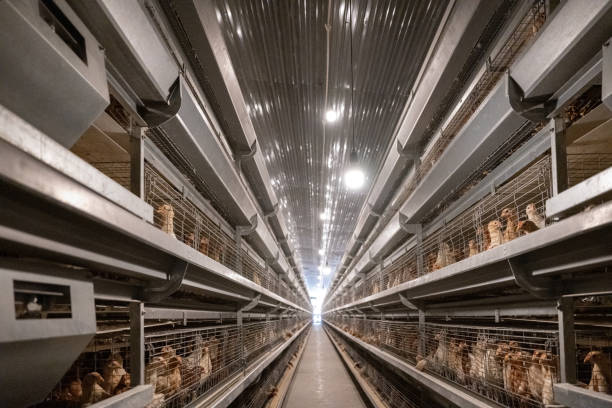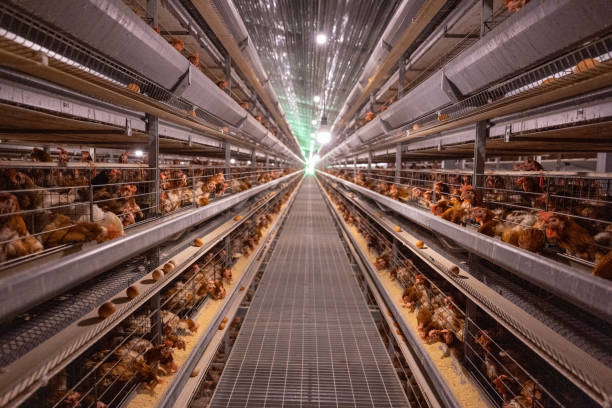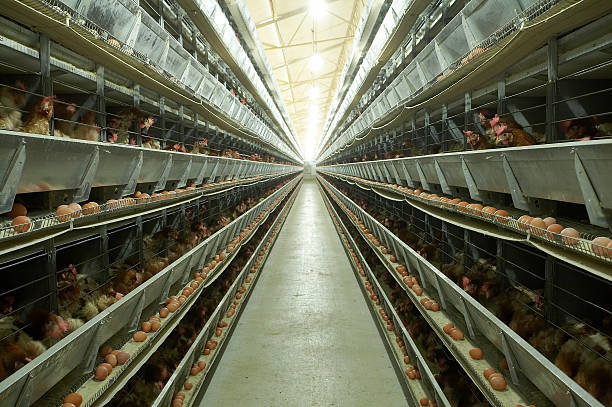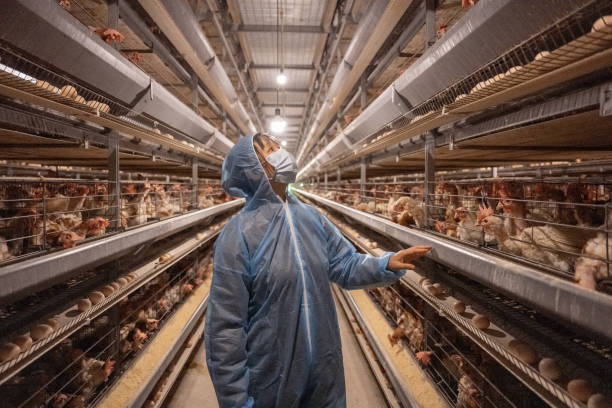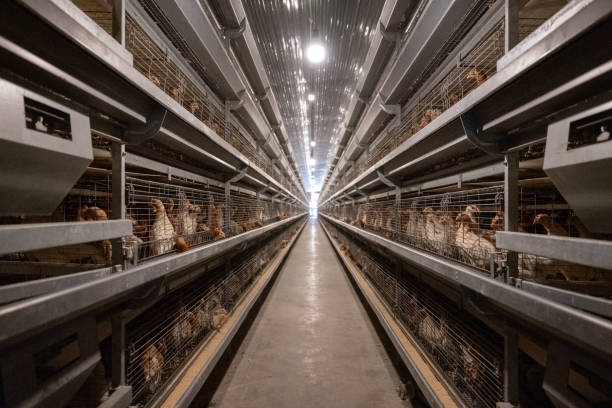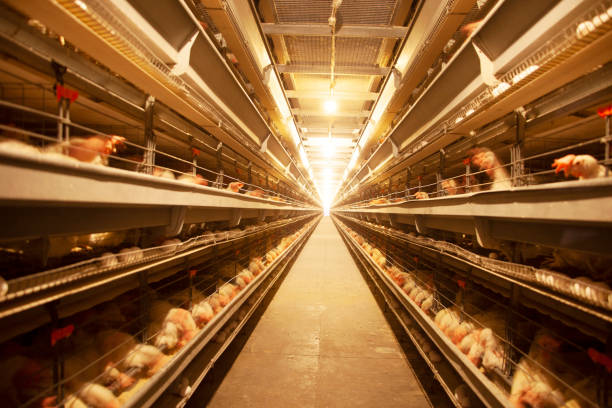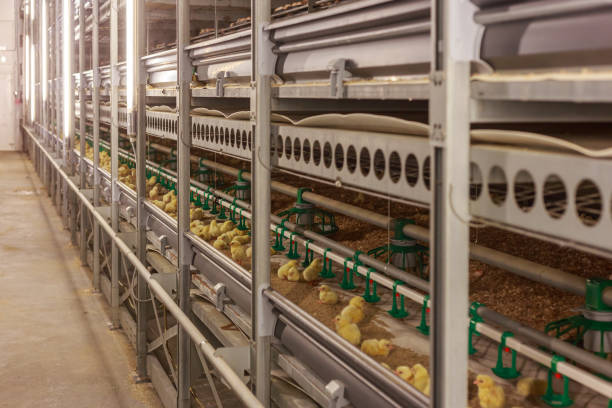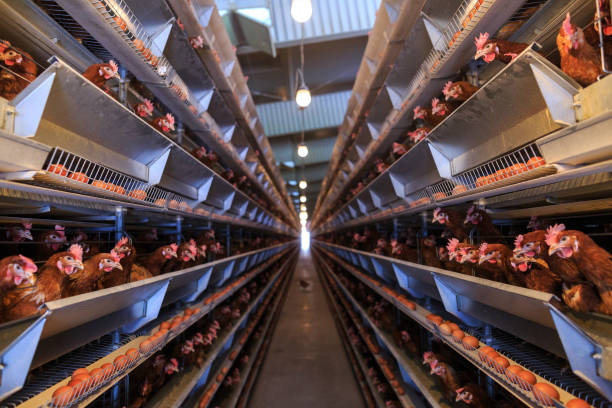

When you’re running a commercial layer farm with 100,000 birds—or planning to scale up to that capacity—you’re no longer just managing chickens. You’re operating a high-precision biological production system where every square meter, every feed gram, every ventilation cycle, and every egg collection moment has to work in perfect harmony. That’s why choosing the right cage system isn’t about “buying equipment.” It’s about investing in infrastructure that supports consistent output, animal welfare compliance, labor efficiency, and long-term ROI. We’ve designed, tested, and deployed fully integrated 100,000-layer chicken cage solutions across over 30 countries—and each one is built around real-world farm conditions, not just catalog specs.
What Makes a Cage System Fit for 100,000 Layers?
It’s not just about stacking more tiers or buying more units. A truly fit-for-purpose 100,000-layer setup demands intelligent integration of five key pillars: structural integrity, automation compatibility, climate-responsive design, biosecurity continuity, and serviceability. Our heavy-duty hot-dip galvanized cages, for example, are engineered with reinforced cross-bracing and 4.2 mm steel wire thickness—not because we like over-engineering, but because 100,000 birds mean over 60 tons of live weight on the structure daily. Add in feed lines, manure belts, egg belts, and automated watering—those loads multiply. We use modular frame systems that allow phased installation without halting production, and our standard layout modules (each serving 3,000–5,000 layers) are pre-configured for optimal airflow and light distribution across houses up to 150 meters long. No guesswork. Just plug-and-play scalability—designed, not improvised.
Automation That Actually Works—Not Just Looks Good
You’ll see plenty of suppliers talk about “fully automated” systems—but how many have actually run diagnostics at 2 a.m. on a humid July night in Punjab or Guizhou, when ambient humidity hits 92% and the manure belt slows down? Our automation stack is field-hardened: egg collection belts with optical egg detection and gentle rubber-gripper sorting; multi-stage manure drying systems that reduce moisture by 65% before removal (cutting transport cost and odor); and smart feeding systems with dual-speed augers and auto-calibrated feed level sensors that prevent bridging—even with pelleted or crumbled feed blends. Most importantly, everything talks to one central HMI panel (touchscreen + remote access via LiviFarmCloud), so your manager can adjust lighting schedules, check feeder fill levels, or trigger emergency ventilation from their phone—all without walking into the house. And yes—we integrate seamlessly with third-party farm management software like FarmWizard or AgriSens, so your data stays unified.
Design Flexibility That Respects Your Reality
Not every 100,000-layer farm looks alike—and neither should its cage system. Some clients operate in arid zones with dust and sandstorms, others in tropical regions with relentless rain and mold pressure. Some rent land and need portable, relocatable units; others own permanent concrete-floored houses and want fully anchored, fixed-frame systems. That’s why we don’t push one-size-fits-all designs. Instead, we start with a free site consultation: soil testing (for foundation prep), wind load modeling, solar radiation analysis, local utility voltage stability reports, even labor availability assessments. Based on that, we offer three configuration options: Classic H-type (best for new greenfield builds), Hybrid Z-frame (ideal for retrofits or semi-outdoor setups), and Compact V-shape (perfect where ceiling height is limited but floor space is abundant). All include optional add-ons—like integrated LED lighting with dimmable circadian rhythm programming, or AI-powered early-mortality detection cameras linked to our cage-mounted thermal sensors.
Long-Term Value: Durability, Support & True Partnership
Let’s be honest—nobody buys a 100,000-layer system for one season. You’ll rely on it for 12–15 years minimum. So durability isn’t a box to tick—it’s the baseline. Every cage panel undergoes triple-layer hot-dip galvanizing (minimum 275 g/m² zinc coating), tested per ISO 1461; all plastic components (nest cups, drinker nipples, roller conveyors) are UV-stabilized and food-grade approved; and critical moving parts—like belt sprockets and drive shafts—are made from stainless steel or marine-grade aluminum. But hardware alone doesn’t guarantee uptime. We back every system with a 5-year structural warranty, on-site technician deployment within 72 hours anywhere in Asia, Africa, or Latin America, and free bi-annual remote health checks via LiviFarmCloud. Plus, our engineering team co-develops SOPs with your farm managers—covering daily cleaning, wear-part rotation schedules, seasonal ventilation calibration, and even flock transition protocols (e.g., how to shift from pullets to peak-lay without cage stress spikes).
If you’re seriously evaluating cage systems for a 100,000-layer facility—or even scoping out your next expansion phase—we’d love to walk through your specific challenges, site constraints, and operational goals. No generic brochures. Just practical, no-BS advice from engineers who’ve installed over 87 large-scale layer projects since 2012. Drop us a message with your name, farm location, current flock size (if any), and preferred contact method—and we’ll send over a customized preliminary layout, CAPEX breakdown, and timeline estimate—no strings attached.
FAQ
What’s the minimum building height needed for a 100,000-layer cage house using your system?
We recommend at least 4.2 meters clear internal height for optimal air exchange and maintenance access—though our compact V-frame option works down to 3.6 meters if ceiling fans and tunnel ventilation are well calibrated.
Do your cages meet European animal welfare standards like EU Directive 1999/74/EC?
Yes—including adjustable perch spacing, nest box dimensions, litter provision options, and adequate floor area per bird (750 cm² minimum as standard). We also offer certified organic-compliant versions with bamboo-lined nests and non-metallic drinking systems.
Can I start with 50,000 layers and expand later?
Absolutely. Our modular layout lets you install Phase 1 (e.g., 4 houses × 12,500 birds) and pre-wire Phase 2 infrastructure during construction—so adding another 50,000 layers later takes just 6–8 weeks, not months.
How much labor does a fully automated 100,000-layer farm really need?
With full automation and LiviFarmCloud monitoring, most farms run smoothly with just 1 supervisor + 3 technicians (12-hour shifts covered), plus part-time support for vaccination or egg packing—roughly a 60% reduction vs. manual systems.
What’s the average payback period for upgrading to your smart cage system?
Based on client data across 12 countries: 2.8–3.6 years, driven mainly by reduced feed waste (8–12%), lower mortality (1.2–1.8% drop), higher egg yield (2.3–3.1% increase), and labor cost savings.
Do you handle civil works and electrical setup—or just supply cages?
We manage turnkey delivery: civil drawing review, foundation layout marking, main power distribution panels, PLC cabinets, lighting circuits, and even backup generator interface. We coordinate with your local contractors—we don’t replace them, but we guide them.
Can your system work with alternative energy sources like solar or biogas?
Yes. Our control systems operate on 24V DC or 220V AC, and we’ve successfully integrated with off-grid solar arrays (with battery buffer) and biogas-powered generators—especially popular in Kenya, Vietnam, and Brazil.
What happens if a key component fails during peak production?
We stock critical spares regionally—egg belts, drive motors, nipple drinkers—and our technicians carry mobile repair kits. For urgent cases, we ship express replacement parts with customs documentation pre-cleared.
Is there training included for my team?
Yes—five days of on-site, hands-on training covering daily operations, preventive maintenance, troubleshooting flowcharts, and cloud platform usage. We also provide multilingual SOP binders and video walkthroughs.
How do you ensure biosecurity across such a large system?
We build in physical barriers: isolated manure corridors, positive-pressure airlocks between zones, UV-C sterilization on incoming air intakes, and cage-washable surfaces only—no crevices or porous materials where pathogens can hide.