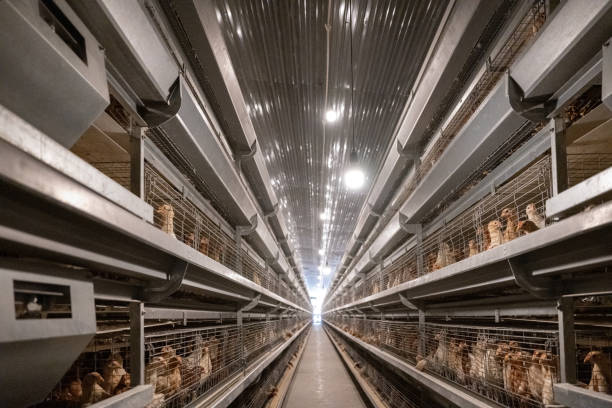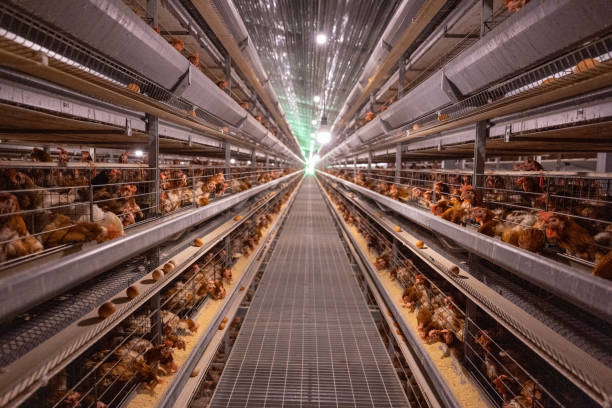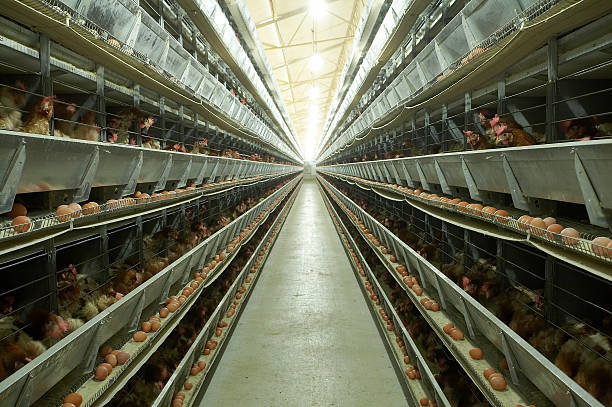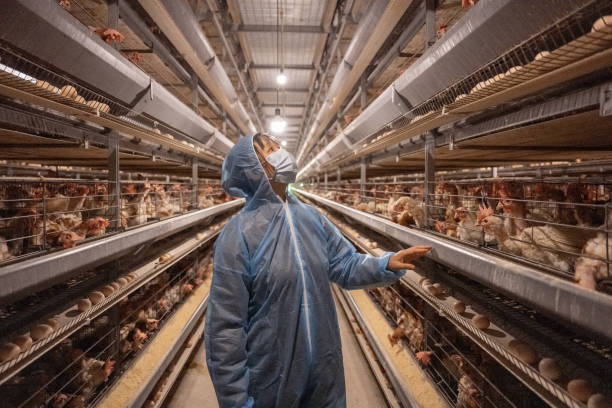

Starting a commercial poultry farm in South Africa requires more than buying chickens and building a shed. A viable project begins with a defined market, correctly zoned land, reliable water, backup electricity, suitable ventilation, strict biosecurity, and equipment matched to the intended production scale. New investors should choose between broiler meat production and layer egg production, calculate working capital for several production cycles, and design the farm for future expansion before ordering equipment.
South Africa has a substantial poultry market, but new farms operate in a challenging environment shaped by feed costs, disease exposure, electricity reliability and strong price competition. Chicken remains an important and comparatively affordable source of animal protein, while commercial producers continue to focus heavily on controlling operating costs.
This poultry farm startup guide in South Africa explains how to turn an initial farming idea into a practical, scalable project.
Should You Start a Layer Farm or a Broiler Farm?
The first decision is whether the farm will produce eggs or chicken meat. These businesses have different cash-flow cycles, housing requirements and equipment configurations.
| Decision Factor | Layer Farm | Broiler Farm |
|---|---|---|
| Main product | Table eggs | Chicken meat |
| Production cycle | Long-term laying cycle | Short production batches |
| Initial cash flow | Slower | Potentially faster |
| Typical housing | Layer cages or alternative housing | Broiler cages or deep-litter housing |
| Important equipment | Feeding, drinking, egg collection and manure removal | Feeding, drinking, heating and ventilation |
| Key management focus | Egg production, shell quality and mortality | Growth rate, feed conversion and market weight |
| Expansion model | Add cage rows or poultry houses | Add production batches or houses |
A layer project may be suitable for an investor with dependable egg buyers, access to feed and sufficient working capital to support the flock before peak egg production. A broiler farm may offer a shorter production cycle, but it depends on reliable chick supply, disciplined temperature control and confirmed buyers at the end of each batch.
Do not choose the production model only because another farmer appears profitable. Confirm who will buy the output, how frequently they will buy, what quality they require and how far the products must be transported.
What Should Be Included in a South African Poultry Farm Business Plan?
A practical poultry business plan should connect farm capacity to actual market demand. It should not begin with a cage quotation alone.
Before construction, document the following:
- Target production capacity and expansion capacity
- Egg or live-bird buyers within the intended sales area
- Expected selling price under conservative market conditions
- Feed suppliers and delivery distances
- Pullet or day-old chick suppliers
- Electricity, generator and fuel requirements
- Water demand, storage and treatment
- Vaccination, veterinary and biosecurity costs
- Labour requirements for each production stage
- Transport, packaging and product distribution
- Mortality, feed-price and market-price risk allowances
Feed is generally the largest recurring expense in broiler production and is often estimated at approximately 60% to 70% of production costs. This makes feed conversion, storage, delivery consistency and wastage control central to profitability.
A startup budget should therefore separate capital expenditure from working capital.
Capital expenditure includes land preparation, poultry houses, cages, feeding lines, water systems, electrical infrastructure, generators and manure facilities. Working capital includes birds, feed, vaccines, labour, packaging, transport, electricity and emergency reserves.
What Legal and Site Checks Are Needed Before Construction?
Poultry-farming requirements can differ by municipality, province, land classification and production activity. Investors should verify local rules before purchasing land or constructing poultry houses.
Depending on the operation, approvals or compliance checks may involve:
- Agricultural or appropriate land zoning
- Municipal animal-keeping requirements
- Environmental and waste-management controls
- Water-use authorisation
- Building approval
- Meat-safety requirements when birds are slaughtered
- Feed-manufacturing approval if the farm produces commercial feed
- Veterinary and import permits for restricted livestock or genetic material
For example, municipal animal-keeping rules may require permits where land is not already zoned for agricultural use. Commercial operators may also need to consider water-use obligations, environmental legislation and meat-safety rules.
When importing live poultry or genetic material, South African government procedures require relevant permits and veterinary documentation.
Because requirements are project-specific, obtain written guidance from the relevant municipality, provincial agricultural office and environmental authority before finalising the site.
How Should the Poultry House Be Designed for South African Conditions?
South Africa has varied climatic zones. A house suitable for the cooler Highveld may not perform well in the hot, humid conditions of KwaZulu-Natal or the dry heat of parts of the Northern Cape.
The poultry-house design should be based on:
- Local summer maximum and winter minimum temperatures
- Humidity and prevailing wind direction
- Bird type and stocking density
- Cage arrangement or floor-production method
- Ventilation volume
- Cooling and heating requirements
- Electricity reliability
- Future house or equipment expansion
In naturally ventilated houses, orientation, sidewall openings, roof insulation and air movement must be carefully coordinated. In environmentally controlled houses, fans, air inlets, cooling pads, sensors and control panels must be designed as one system.
Livi Machinery can prepare an automatic poultry farm design that coordinates the poultry-house dimensions with cage rows, service passages, ventilation equipment, feeding routes, manure discharge and egg-transfer areas.
The company catalogue describes integrated poultry-farm planning that combines housing design, cage configuration, environmental control, feeding, drinking, manure removal and egg handling.
How Can a Farm Manage Electricity and Load-Shedding Risk?
Electricity resilience must be planned at the design stage, especially for farms using mechanical ventilation, automated feeding, cooling pads or electronic environmental controls.
Power interruptions can stop:
- Ventilation fans
- Cooling-pad pumps
- Feed-delivery motors
- Water pumps
- Egg-collection lines
- Manure belts
- Lighting and control systems
Ventilation failure during hot weather can create serious flock losses in a short period. South African poultry producers have repeatedly identified unstable electricity and rising tariffs as major operational risks.
A commercial house should therefore have:
- A correctly sized standby generator
- Automatic or clearly documented changeover procedures
- Fuel storage for extended outages
- High-temperature and power-failure alarms
- Emergency ventilation openings
- Regular generator testing
- Separate protection for control systems and sensors
- Optional solar or battery support for critical low-load equipment
The backup system must be sized according to essential operating loads, not only the total connected load. Fans, water pumps and environmental controls should receive priority over equipment that can be paused temporarily.
What Poultry Equipment Is Needed for a Startup Farm?
Equipment selection depends on flock size, bird type, labour availability and planned automation level.
Equipment for a Layer Farm
A commercial layer project may include:
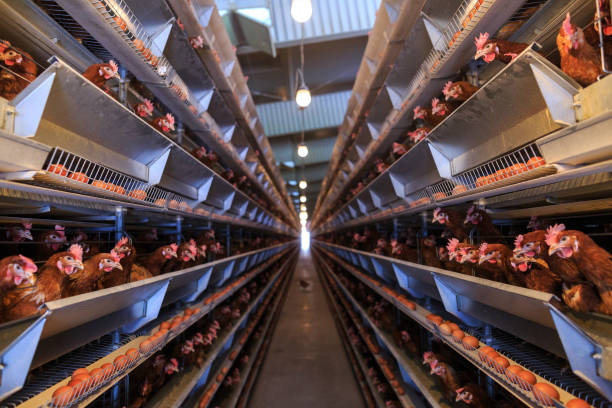
- A-type or H-type layer cages
- Feed troughs and automatic feeding equipment
- Nipple drinking lines
- Water-pressure regulators and medication units
- Manure-removal belts or scrapers
- Egg-collection belts
- Ventilation fans and air inlets
- Cooling pads
- Environmental sensors and controllers
- Feed silos
- Egg grading or packing equipment
An A-type layer chicken cage solution may be appropriate for a medium-sized startup seeking lower initial investment and easier manual management.
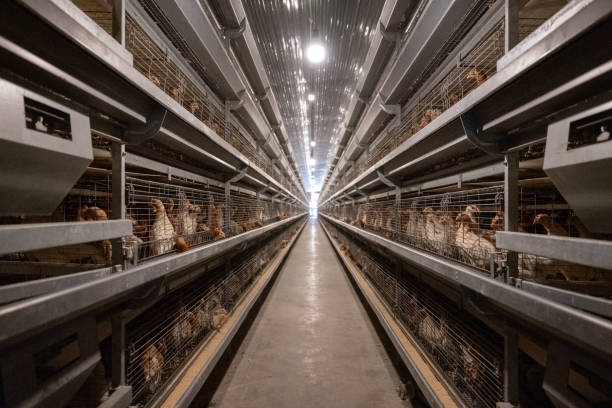
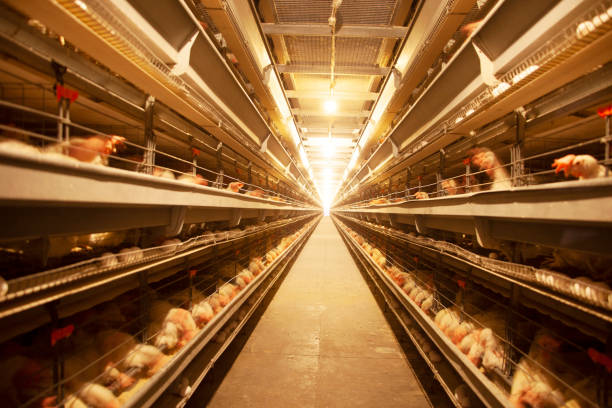
An H type layer battery cage system is generally more suitable for high-density production, limited land, larger capacities and deeper automation. Livi’s product information includes multi-tier H-type configurations, automatic feeding, drinking, manure removal and egg collection, with customised capacities available.
Equipment for a Broiler Farm
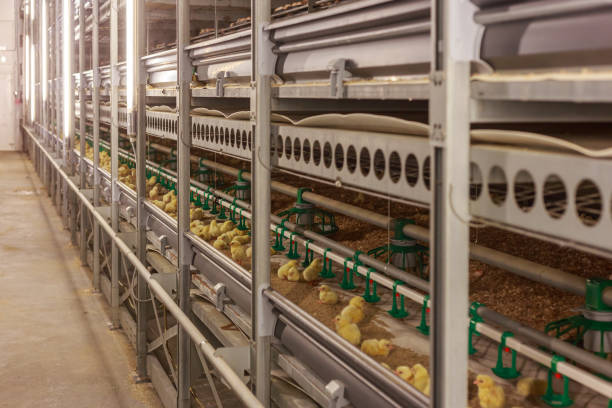
A broiler project may use either a deep-litter system or a broiler cage system. Typical equipment includes:
- Automatic pan or trough feeding
- Nipple drinkers
- Brooding heaters
- Ventilation fans
- Cooling pads or fogging equipment
- Environmental controllers
- Feed silos and augers
- Lighting
- Broiler cages or litter-handling equipment
- Weighing and monitoring systems
Broiler housing must maintain stable conditions during the brooding period. Poor temperature control during the first days can reduce growth uniformity and affect the entire batch.
Which Automation Level Is Best for a New Poultry Farm?
Automation should solve a defined management problem. It should not be installed merely to make a farm appear modern.
| Farm Situation | Recommended Approach |
| Small startup with available labour | Manual or semi-automatic feeding and egg handling |
| Medium layer farm | Automatic feeding, drinking and manure removal |
| Large commercial layer operation | Integrated feeding, manure removal, egg collection and climate control |
| Broiler farm in a hot region | Priority investment in ventilation, cooling and alarms |
| Farm with expensive labour | Greater automation of repetitive work |
| Site with unstable electricity | Automation plus generator and emergency-control design |
| Project planning future expansion | Modular equipment and reserved house capacity |
Automatic feeding improves feed distribution and reduces repetitive labour. An automatic manure removal system helps keep manure away from the birds, improve house hygiene and reduce the daily workload. Automatic egg collection can reduce manual handling, improve collection efficiency and help limit egg damage when correctly adjusted.
Livi’s layer equipment is designed with a sloped cage floor to support egg rolling and reduce breakage. Its catalogue states that appropriate cage configuration can achieve an egg breakage rate below 0.3%, although actual farm performance will also depend on installation, egg collection frequency, bird management and maintenance.
How Should Biosecurity Be Included in the Startup Plan?
Biosecurity is an infrastructure decision as much as a management procedure. South Africa has experienced serious highly pathogenic avian influenza outbreaks, including reported H5N1 cases in 2025.
The farm layout should include:
- A controlled entrance
- Visitor and vehicle records
- Footbaths or hygiene barriers
- Separate clean and dirty routes
- Quarantine space
- Secure feed storage
- Wild-bird and rodent control
- Dead-bird disposal procedures
- House cleaning and disinfection areas
- Sufficient distance between poultry houses
- All-in, all-out flock movement where practical
The Poultry Disease Management Agency supports disease surveillance and monitoring within the South African poultry sector. Farm managers should also maintain contact with a poultry veterinarian and follow current government disease-control requirements.
How Can a New Farmer Reduce Startup Risk?
The safest approach is to build the project in controlled stages.
First, validate the market and prepare a realistic financial model. Second, complete site, water, power and compliance checks. Third, create a full farm layout even if only one poultry house will be constructed initially. Fourth, order equipment only after the building dimensions, bird capacity and ventilation calculations have been confirmed.
Avoid these common startup mistakes:
- Building before confirming the equipment layout
- Underestimating feed and working-capital requirements
- Relying on one buyer
- Installing automation without backup power
- Using untreated or untested water
- Mixing bird ages on the same site without separation
- Ignoring manure storage and disposal
- Purchasing cages without installation drawings
- Designing a house that cannot be expanded
- Choosing the lowest quotation without comparing materials and system scope
A coordinated plan can prevent costly changes to foundations, passage widths, ceiling heights, feed routes and manure outlets after construction begins.
What Support Can Livi Machinery Provide?
Livi Machinery supports new and expanding poultry projects through a coordinated planning and equipment process.
Depending on project requirements, the service scope can include:
- Poultry-house layout and capacity calculations
- Cage-type selection
- Feeding and drinking-system configuration
- Manure-removal planning
- Egg-collection design
- Ventilation and cooling calculations
- Equipment manufacturing
- Shipping coordination
- Installation drawings and technical guidance
- Commissioning and operating support
- After-sales assistance
Instead of treating cages, housing and ventilation as separate purchases, the project can be planned as one production system. This is particularly important when selecting poultry cage equipment for large farms, where a small design error may affect thousands of birds and several automated processes.
FAQ
How much land is needed to start a poultry farm in South Africa?
The land requirement depends on the number of houses, cage density, biosecurity separation, manure storage, access roads and expansion plans. H-type layer cages can reduce the building footprint per bird, but the farm still needs sufficient external space for feed delivery, ventilation discharge, waste handling and future construction.
Is layer farming or broiler farming more profitable?
Neither model is automatically more profitable. Layers can generate regular egg income over a longer period, while broilers offer shorter production cycles. Profitability depends on feed costs, mortality, selling price, production efficiency, finance costs and access to buyers.
Can a poultry farm operate during load-shedding?
Yes, but an automated or environmentally controlled farm requires correctly sized backup power. Mechanical ventilation, water supply and environmental alarms should be treated as critical loads.
Are H-type cages suitable for a startup farm?
H-type cages are suitable when the planned capacity, land constraints and labour economics justify higher automation. A smaller startup may obtain a better financial balance from A-type cages or phased automation. The choice should be based on lifecycle cost rather than cage price alone.
What information is required for a poultry-equipment quotation?
A supplier will normally need the target country, farm location, bird type, bird capacity, house dimensions, preferred cage type, required automation level, available voltage and whether the poultry houses already exist.